
Syrian-Armenian agronomist proposes introducing regenerative farming standards in Armenia
Safe Agro is proposing to create the Armenian Regenerative Network for regenerative farming supporters in Armenia. The company produces fertiliser and chicken meat in Syria under the relevant standards and plans to launch the same production in Armenia. Narek Gareginyan, the company’s founder, said this in an interview with BusinessDaily at the AGRO EXPO exhibition that has just ended in Yerevan. Regenerative agriculture is a set of methods aimed at restoring soil fertility, and it is also subject to certification.
“We saw that this topic does not exist in Armenia, it is not discussed. There should be an association so that other interested people like us, who believe in this opportunity and these methods, can come together, have a bigger impact and cooperate with each other,” Gareginyan said. According to him, the company’s strategy in Armenia is built on regenerative agriculture certification. “Since there is no such association, we wanted to be the ones to take the first step,” he added.
Gareginyan explained that international certification schemes mostly include six requirements. Each plot is studied individually, ploughing is kept to a minimum so the soil has time to recover, different crops are sown at the same time, soil cover is preserved, land use is integrated with livestock, and the farm must not harm its workers or the social environment.
The initiative is also tied to the company’s commercial interest. “We want the market to be more favourable for our products. That is, this fertiliser will be bought by people who want to obtain certification in regenerative agriculture,” Gareginyan noted. Since such certification does not yet exist in Armenia, he said, the company wants to raise the topic so that a group of farmers takes it forward, and to speed up the process by covering the local market. In Gareginyan’s estimate, the market exists, and more than 200 foreign companies will sooner or later go down this path. “Now we want to do the same work in Armenia,” he stressed.
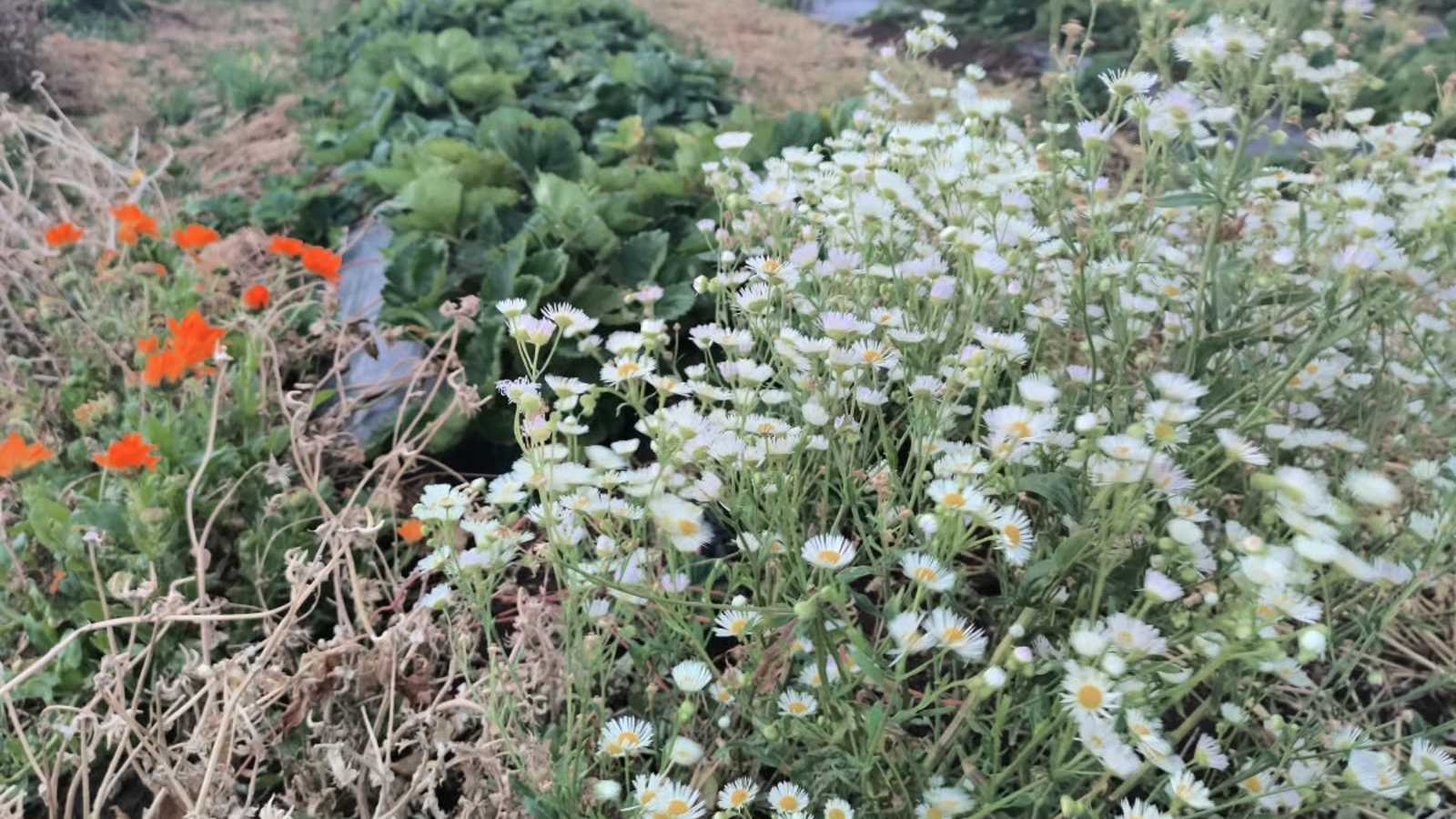
The company is testing the methods on a 10-hectare plot. According to Gareginyan, the grass there is not mowed and no tractor is used; instead, chickens and turkeys kept in mobile coops loosen and fertilise the soil, the ground is covered with mulch, and no chemicals or fertilisers are applied. The company has tested 70 methods in Armenia so far, most of which work in the local climate, with results becoming clearer from the second year. Plant diversity is also used: for example, lavender is planted around the strawberry beds, attracting insects that benefit the strawberries and drawing pests away from them. Asked about the difference in income from 10 hectares with and without these methods, Gareginyan replied: “Approximately 30%.” He did not provide a calculation methodology. In his view, if the market were informed about the quality of such produce, it would be much more expensive. As Gareginyan explained, regenerative agriculture certification does not require farmers to stop using pesticides altogether. What matters, in his words, is that every year less of them is used than the year before.
Photo: Armenian Regenerative Network on Facebook


