EuroChem claims 60% of Armenia’s fertiliser market, credits growth to work with farmers
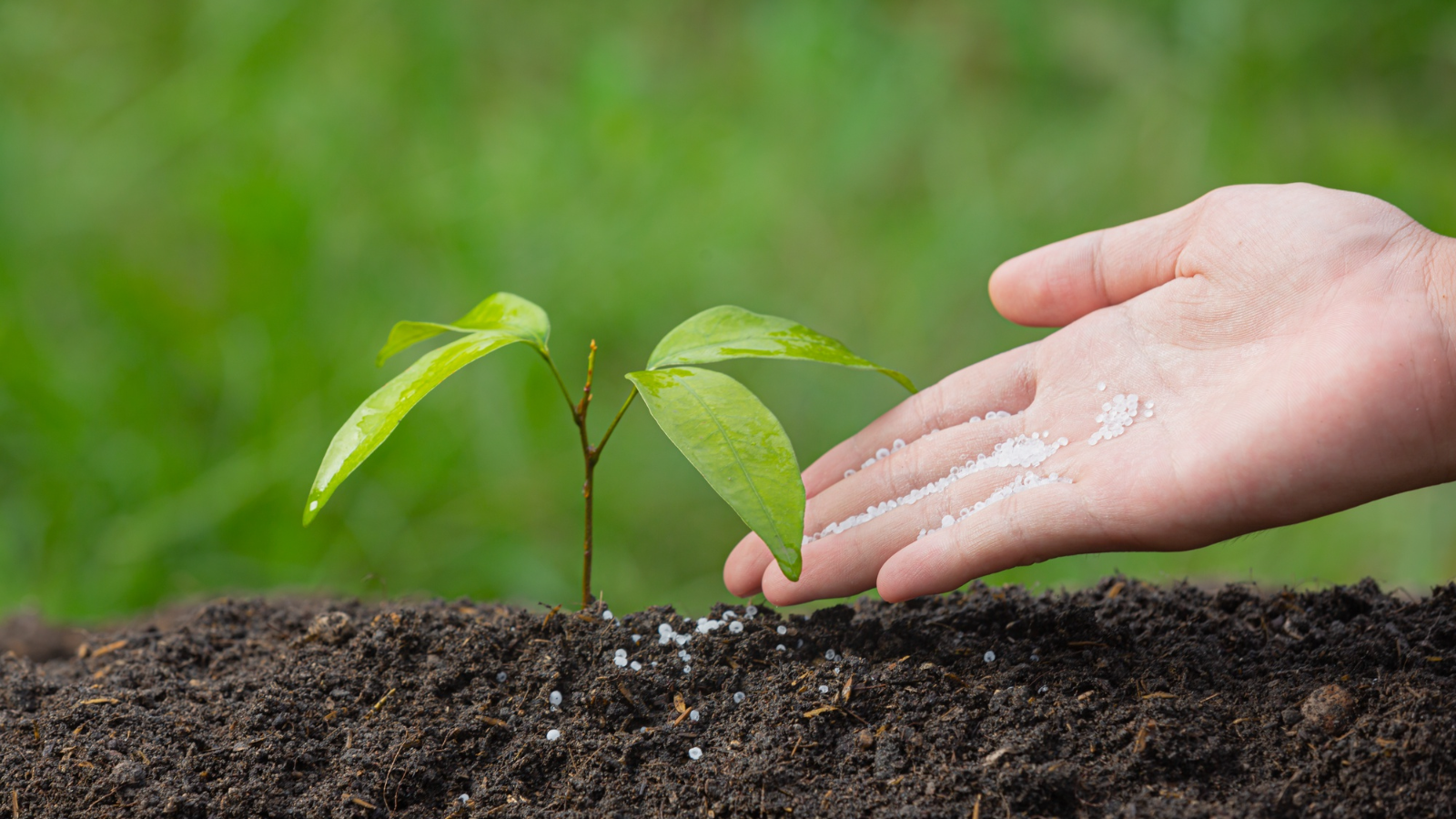
EuroChem estimates its share of Armenia’s fertiliser market at 60%, saying its deliveries to the country have grown from 4 thousand to 30 thousand tonnes a year. The company credits the growth to its work with farmers, while official statistics show Armenia’s fertiliser imports rose 49% to $22.2 million in the first half of 2026.
JSC MCC EuroChem (Moscow, Russia) supplies about 30 thousand tonnes of fertiliser a year to Armenia, Tatiana Grebennikova, director of the company’s marketing department, told BusinessDaily.am. She estimates the company has worked in the Armenian market for more than eight years and now holds “practically 60%” of it. There is no independent confirmation of this share: it is the company’s own estimate.
“We started with 4,000 when we came to this market… now it’s 30,000,” Grebennikova said. That means deliveries have grown 7.5-fold over the company’s entire time in Armenia. An annual growth rate cannot be derived from this: the starting year was not named in the interview.
Selling a programme, not a bag
The company attributes its growth not to price but to agronomic support. “We don’t just sell fertilisers, we teach farmers to use them correctly. Not a lot, but well,” Grebennikova explained. She said EuroChem specialists draw up nutrition programmes for farms tailored to specific crops. Farmers see the benefit in higher yields and better product quality, and better produce sells for more.
Before each season the company holds meetings with farmers in about four provinces where its Armenian partners operate. According to Grebennikova, more than 50 large farmers attend each meeting.
One of these partners, Novator, describes a market where much depends on personal connections. “There is no single platform where you can go in, look, find,” said Shushanik Ghazaryan of Novator. She said farmers find the company through recommendations, by word of mouth. Novator has been on the market for more than ten years and works with more than 200 farmers.
Under this model, a supplier competes not only on product. It also competes on access to knowledge and customer trust. Where a farmer learns about a supplier from a neighbour and about a feeding programme at a distributor’s seminar, market share can grow faster than prices or the product range.
What the statistics show
According to preliminary data from the Statistical Committee of Armenia, the country imported $22.2 million worth of fertilisers in January-June 2026. That is 49% more than a year earlier, when imports totalled $14.9 million.
Nitrogen fertilisers account for the bulk: $13.2 million, or about 60% of all fertiliser imports. Their imports rose to 13.4 thousand tonnes in nitrogen terms from 11.4 thousand tonnes a year earlier (+18%). In value terms, growth was 41%. Imports of mixed and complex fertilisers grew even faster: 6.5 thousand tonnes versus 4.1 thousand tonnes (+58%), worth $7.5 million (+63%). Potash and phosphate fertiliser imports are small but also rose: potash to 515 tonnes in K₂O terms (from 267 tonnes), phosphate to 280 tonnes in P₂O₅ terms (from 82 tonnes).
Russia is the main supplier: $10.7 million, or 48% of all fertiliser imports (50% in the first half of 2025). Imports of Russian nitrogen fertilisers rose to 8.7 thousand tonnes in nitrogen terms (from 7.0 thousand tonnes, +24%). Imports of complex fertilisers increased almost 1.7-fold, to 4.6 thousand tonnes from 2.6 thousand tonnes.
Georgia is second: $5.0 million, or 22% of imports (18% a year earlier). Almost all of it is nitrogen fertiliser: 4.4 thousand tonnes in nitrogen terms versus 3.5 thousand tonnes. The value of Georgian nitrogen rose 85%, far more than the volume. The average customs value per tonne of nitrogen from Georgia rose from about $770 to $1,110. For Russian nitrogen it changed little, from about $800 to $840. Spain ($1.6 million) and Italy ($1.1 million) follow at a considerable distance.
Annual Statistical Committee data show Armenia imported $28.5 million worth of fertilisers in 2025, up from $22.2 million in 2024 (+28%). In other words, in January-June 2026 the country imported as much in value terms as in the whole of 2024. Imports from Russia rose from $12.7 million to $15.5 million, while Russia’s share fell from 57% to 54%. Imports from Georgia grew from $2.6 million to $3.6 million. Nitrogen fertiliser imports rose from 21.0 thousand to 22.3 thousand tonnes in nitrogen terms, and from $14.1 million to $18.1 million in value.
EuroChem’s figures and the statistics cannot be compared directly. Nitrogen, potash and phosphate fertilisers are recorded in terms of active substance, while the company cites the physical volume of deliveries. In addition, the statistics here cover a half-year, not a full year. These data therefore cannot be used to calculate the company’s exact market share. One thing can be said: the growth in imports does not contradict the supplier’s statement that its sales have increased.
Photo: Magnific/jcomp