
Expert: lack of import licensing procedure for veterinary drugs delays supplies to farmers in Armenia
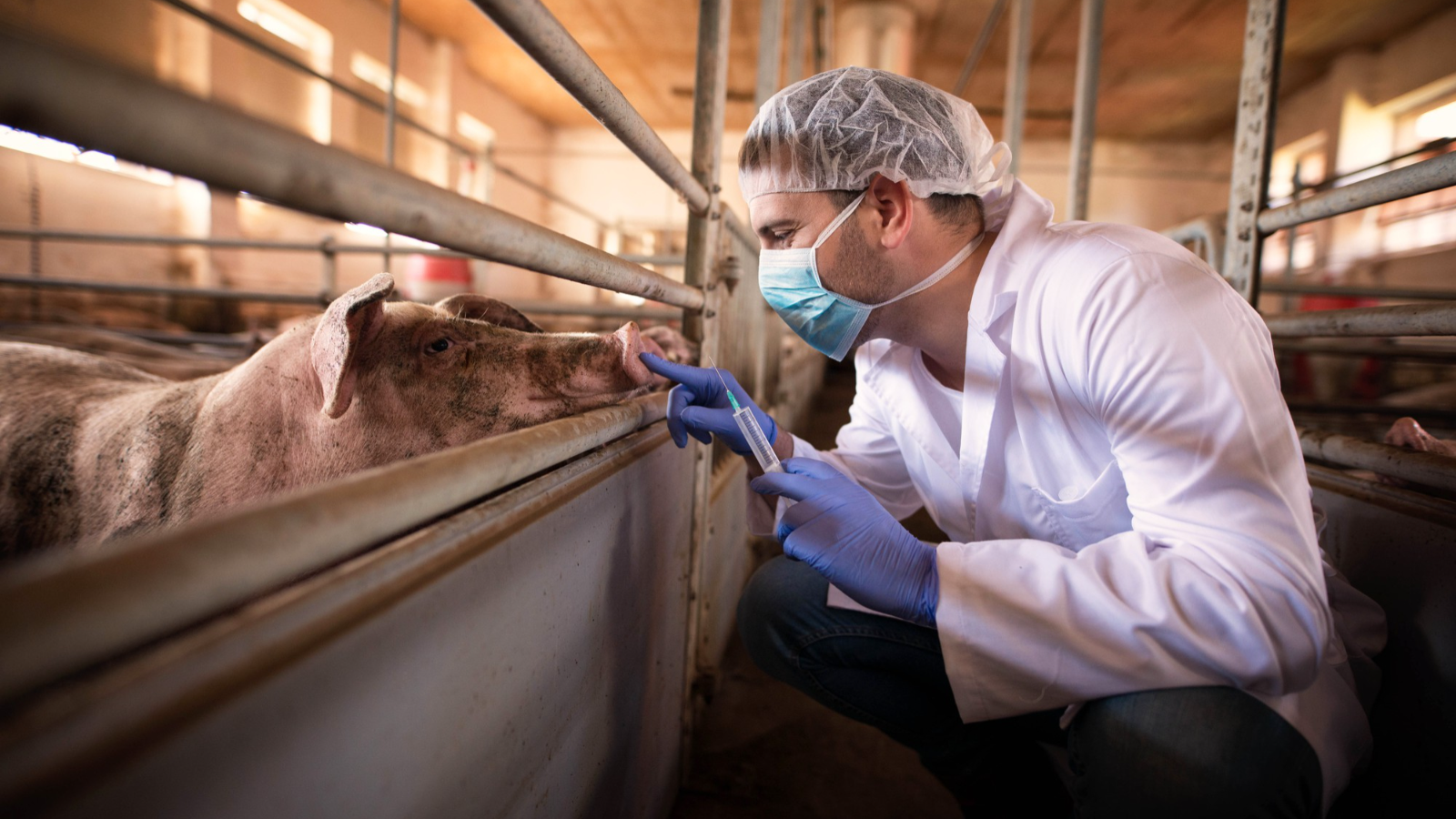
A licence requirement for imports of veterinary drugs is creating obstacles to supplies for farmers, Levon Eghoyan, a veterinarian and representative of Regulus Zoo, told BusinessDaily at the AGRO EXPO exhibition in Yerevan, Armenia. He said that at the time of the interview one of the company’s consignments had been held at customs for about 20–25 days: a licence was required for its release, but, according to him, the document could not be obtained because the procedure has not been settled.
“We have goods that have been at customs for about 20–25 days. They are neither released nor sent back. They say: submit a licence, but for now no agency can issue a licence,” Eghoyan said.
According to the company representative, the requirement is imposed by the State Revenue Committee, while the procedure for issuing the relevant licence is not yet up and running. Eghoyan believes the document should be issued by the Ministry of Economy, but cautioned that he is not fully certain on this point. He did not name the specific regulation or the detained product in the interview.
“The veterinary licence has become a problem for importing organisations that have obligations to farmers and rural residents,” he said.
For the importer, the issue is not only about release times. Eghoyan said suppliers must provide poultry, pig and other farms with drugs, vaccines and feed products on time. He links meeting these obligations to biosecurity in livestock farming.
Eghoyan also drew attention to vaccine transport conditions. If a product requires a certain temperature regime and protection from light, importers must maintain these conditions all the way to the buyer. He urged suppliers to organise transport so that farmers receive a good-quality vaccine, not a spoiled one. He did not, however, report any breach of storage conditions for the detained goods.
Regulus Zoo has been on the market since 2011 and, according to Eghoyan, represents about two dozen manufacturers in Armenia. The company supplies veterinary drugs, vaccines, disinfectants and feed additives for livestock, poultry, aquaculture and pets.
Other market participants describe supply trends differently. Lyudmila Kirova, representative of Russia’s Federal Centre for Animal Health (ARRIAH), reported growth in supplies to Armenia. “Growth, yes, of course. We supplied more than last year,” she said. The interview mentioned vaccines against poultry diseases and foot-and-mouth disease, as well as diagnostic products; exact volumes and value of supplies were not given.
Meanwhile, Shushanik Ghazaryan, representative of Novator, an Armenian distributor for many foreign companies, answered a question about volume growth in a conversation about vaccines: “No, they are decreasing.” Company representatives also said the Ministry of Economy buys vaccines and provides them to farmers under a support programme. Ghazaryan declined to comment on the reasons for changes in livestock numbers, suggesting that farmers and the Ministry of Economy be asked.
Discussing the state of the market, Eghoyan stressed that rising sales of veterinary products do not in themselves indicate growth in livestock farming. In his assessment, mistakes in keeping, caring for and vaccinating animals can force farms to buy more drugs and feed additives.
“Because of mistakes, a villager, a farmer, a vet buys more veterinary products or feed additives, and that is what leads to growth. But if the work is done competently, it will lead not to an increase in financial volumes but to their stabilisation,” he explained.
According to the State Revenue Committee of Armenia, Armenia’s imports under the aggregated product group 3002, which includes vaccines and other biological and immunological products, totalled $39.9 million in 2025, compared with $65.0 million in 2024, down 38.7%. Supplies from Russia in the same group rose from $1.23 million to $4.44 million, or 3.6-fold.
In the related segment of animal feed preparations, code 2309, the value of imports rose 12.1%, from $52.0 million in 2024 to $58.3 million in 2025. Physical volume grew 6.4%, from 47.0 thousand to 50.0 thousand tonnes. The largest suppliers by value in 2025 were Italy at $17.1 million, Iran at $11.5 million and Russia at $9.8 million. This group includes products for various animals, including pets, and is not the same as the market for feed additives for agricultural producers.
Data from the Statistical Committee of Armenia show that as of January 1, 2026, Armenia had 468.0 thousand head of cattle, compared with 475.8 thousand a year earlier, a decrease of 1.6%, or 7.8 thousand head.
Trends differed in other segments. As of January 1, 2026, the pig population was 168.8 thousand head, compared with 182.3 thousand a year earlier, down 7.4%. The number of sheep, by contrast, rose 1.7%, from 668.4 thousand to 679.5 thousand head, while goats fell 6.9%, from 17.4 thousand to 16.2 thousand. The combined sheep and goat population increased 1.4% to 695.7 thousand head.
The poultry population rose 3.0% over the same period, from 4.68 million to 4.82 million. Of these, laying hens numbered 3.12 million, compared with 2.88 million a year earlier, up 8.3%. The poultry figure includes chickens, roosters, turkeys, ducks, geese and other domestic poultry. The issue of timely supply of veterinary drugs therefore also concerns segments where livestock numbers are growing.
Livestock and poultry in Armenia, thousand head
| January 1, 2025 | January 1, 2026 | Change | |
|---|---|---|---|
| Cattle | 475.8 | 468.0 | -1.6% |
| Pigs | 182.3 | 168.8 | -7.4% |
| Sheep | 668.4 | 679.5 | +1.7% |
| Goats | 17.4 | 16.2 | -6.9% |
| Sheep and goats | 685.8 | 695.7 | +1.4% |
| Poultry | 4,675.9 | 4,817.0 | +3.0% |
| incl. laying hens | 2,876.6 | 3,115.2 | +8.3% |
Source: Statistical Committee of Armenia.
In the second quarter of 2026, milk production fell 3.4% from the same quarter of 2025 to 199.0 thousand tonnes, and egg production fell 7.4% to 289.4 million eggs. The volume of livestock and poultry sold for slaughter, including on-farm consumption, decreased 1.3% to 23.0 thousand tonnes live weight.
Photo: Magnific/aleksandarlittlewolf


