higher-education, universities, admissions, education-reform, international-students, draft-decree
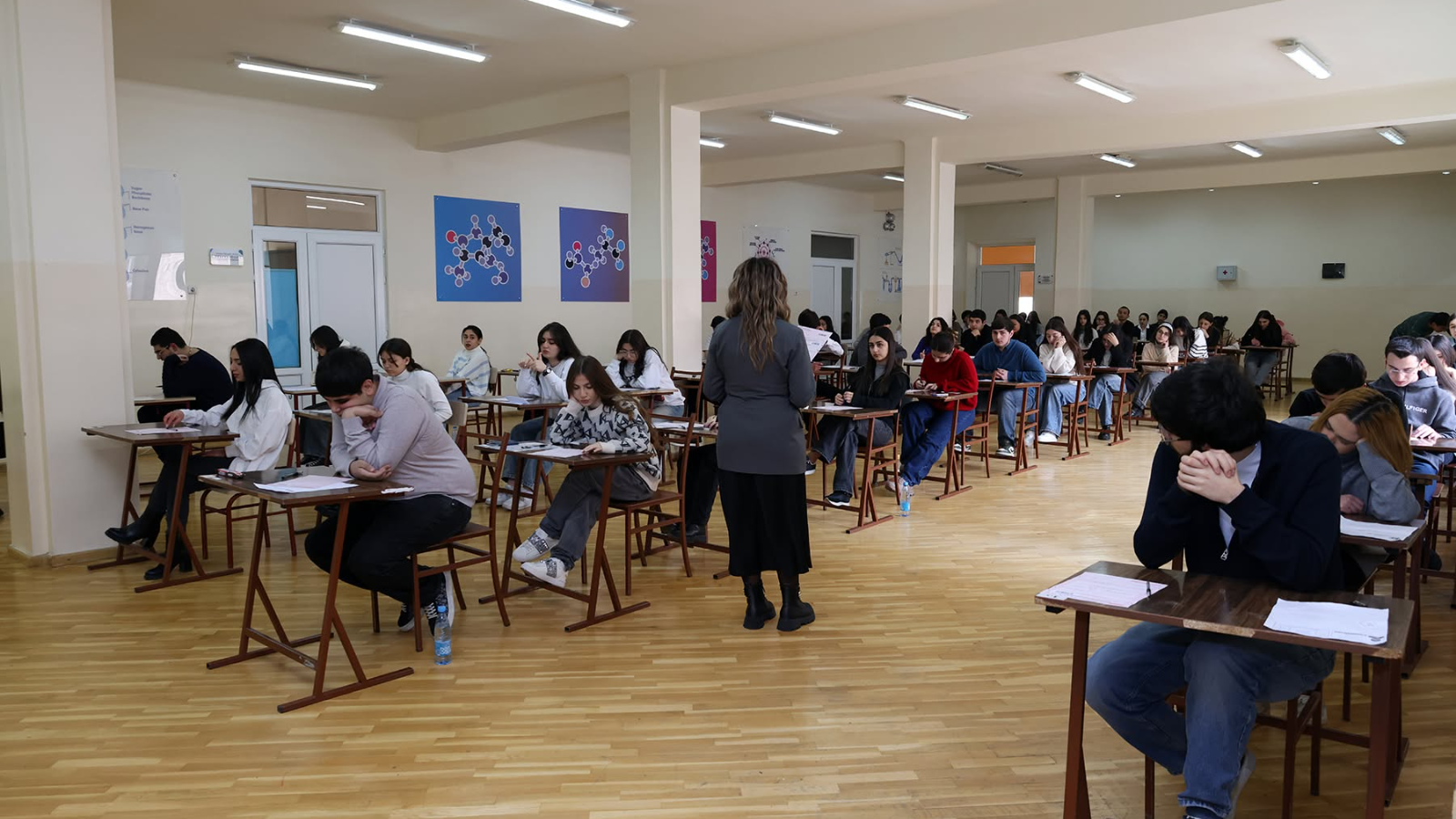
Universities in Armenia will run their own admissions and set competition criteria from the 2030–2031 academic year, while Armenian citizens will still need an external assessment certificate in Armenian language and mathematics with a grade of at least “good”.
Under a draft government decree, the new procedure for organising higher education will replace two decrees from 2012, which will lapse on January 10, 2030. They govern university admissions and students’ academic mobility. The draft was put up for public consultation by the Higher Education and Science Committee of Armenia’s Ministry of Education, Science, Culture and Sport, with comments accepted until November 12.
Admissions are currently organised by the Assessment and Testing Center, a specialised state body. Places are allocated on the results of unified and university-level exams, and applicants register on dimord.am.
One application, several preferences
Admissions will run through a centralised digital platform on a “one application, multiple preferences” basis. Applicants may apply to several programmes at one or more universities and, once admitted, study two specialities at the same time, only one of them full-time. The platform will show each programme’s licensing and accreditation status, number of places, tuition fee, entry requirements and deadlines. Until registration closes, applicants may reorder their preferences, which stay hidden from universities until places are allocated.
The authorised state body will publish the annual admissions timetable at least nine months before registration opens.
External assessment at least twice a year
External assessment in Armenian language and mathematics will be held at least twice a year, and exams may be retaken to improve the result. A certificate will be valid in the year it is obtained and the following two admission years, and where there are several results the highest counts automatically. Tasks will test functional language literacy, quantitative and logical reasoning, data interpretation and problem-solving.
Preliminary results will be published within 30 days of the exam. Appeals may be filed within 3 working days and will be reviewed within 5 working days. Open answers are marked by at least two independent assessors. A university may not require a retake from an applicant with a valid result, nor duplicate the external assessment with its own exam of the same content.
What universities may require
Universities will publish admission rules for each programme, including requirements and assessment methodology, at least three years before the academic year concerned. Rules for the 2030–2031 intake must therefore be known no later than 2027. University-level assessment may include a subject exam, a creative or performance task, a portfolio, a structured interview, a motivation letter, assessment of volunteering, a situational test, a pre-admission study module or a combination of these. University exams may not go beyond the state standards for general education.
Assessment components, their weights and the scoring formula may not be changed during the competition. Applicants who meet the minimum requirements but do not get a place will go on a waiting list. For certain groups of applicants defined by law, a university may set a special admission procedure for up to 5% of its licensed places.
The Armenian language and mathematics certificate is mandatory for Armenian citizens and for non-citizens who studied under Armenian general education programmes. Applicants to programmes taught in a foreign language will submit an internationally recognised language certificate.
Credits, diplomas and international students
One credit will equal 25–30 hours of student work. Bachelor’s programmes will total 180–240 credits, master’s programmes 60–120 and integrated programmes at least 300, with full-time students earning 60 credits a year. Work-based learning, internships and practical training together may account for up to 30 credits, and academic leave may last up to one year.
Diplomas and diploma supplements will be issued free of charge, at least in Armenian and English, with digital copies available through the state register of qualifications. The supplement will follow the pan-European format developed by the European Commission, the Council of Europe and UNESCO. International students will take an introductory course in Armenian language and history, and foreign qualifications will be recognised before admission.
Exceeding the guideline length of study cannot be grounds for expulsion, and students may not be expelled during academic leave or maternity leave. Anyone who has interrupted their studies will be able to resume them regardless of the reason or length of the break.
Reform targets
According to the explanatory note, the new procedure is part of a broader overhaul of the sector. By 2030 the state aims to have at least 4 Armenian universities (regardless of founder) in the top 500 of international rankings and to at least double the number of international students by raising the quality of education. Merging state universities is another priority.
The draft does not change revenue or spending in the state or local budgets. The decree will take effect on the tenth day after its official publication.
Photo: Ministry of Education, Science, Culture and Sport of Armenia