Armenia launches $14 million seven-year physical AI programme at universities
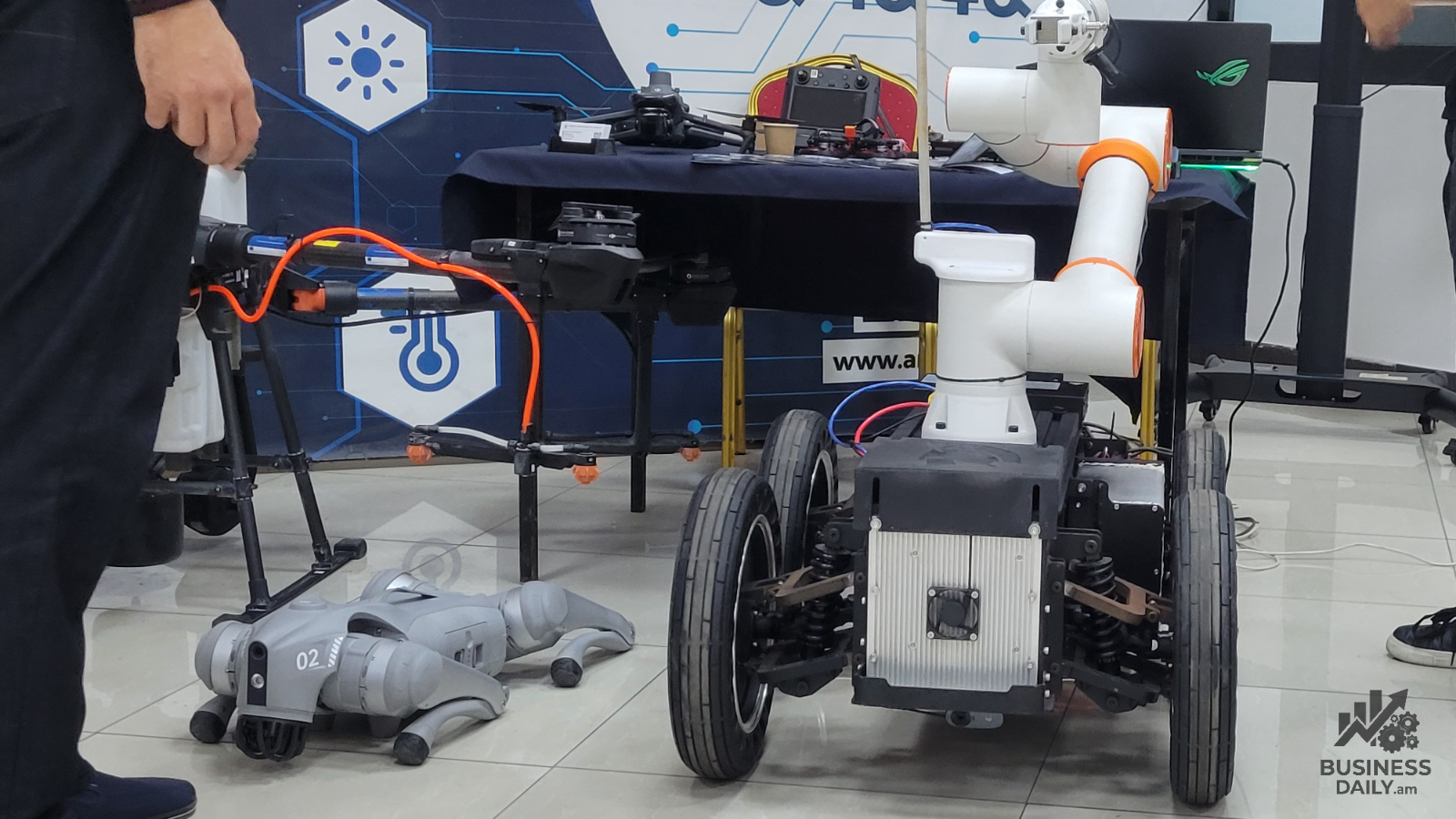
Armenia’s government has approved a seven-year physical artificial intelligence (AI) programme, covering the intersection of robotics and AI, with a total budget of AMD 4.83 billion ($14 million). Under the government decision, the state and private partners will co-finance the programme on a 1:1 basis, with state budget funding capped at the dram equivalent of $7 million.
The programme will run at Yerevan State University (YSU), the National Polytechnic University of Armenia and the American University of Armenia. The private partner is the Ba-GIN Center for Sciences and Artificial Intelligence foundation (ARCS.ai), founded in 2025 by the Armenian Cultural and Scientific Society (ASOF). The society’s international network includes about 370 scientists, among them three Nobel laureates.
Minister of Education, Science, Culture and Sport Zhanna Andreasyan said a permanent scientific core would be formed at the universities over the seven years. “In the first year, we will allocate AMD 168.4 million in state funding. This will mainly go to the base part of scientists’ pay,” the minister noted.
The programme plans to bring in 3 long-term senior scientists on six-year contracts, more than 12 postdoctoral researchers and more than 60 short-term visiting scientists from at least 10 countries. The Polytechnic University’s Laboratory of Intelligent Systems and Advanced Control will be re-equipped as a physical AI research laboratory, and a second laboratory will be set up. Over seven years, 364 students will be enrolled and about 330 will graduate, with targets including more than 20 scientific publications, at least 2 patents and 5 start-ups. Computing power will come from the YSU supercomputer and the state-acquired Firebird AI centre, while the foundation is working with Agile Robots on laboratory equipment.
According to the justification, no more than 100 students currently study robotics in Armenia, and few companies work directly in robotics. In autumn 2025, the foundation ran 9 courses at several universities, attended free of charge by about 80 students.
Under the base scenario of the cost-benefit analysis, the programme’s economic net present value is AMD 939.9 million and its benefit-cost ratio 1.25, while every dram of government funding is expected to generate AMD 2.38 in benefits for the economy. About 71% of the budget, AMD 3.41 billion, will be spent in Armenia, and the total contribution to GDP is estimated at about AMD 4.44 billion.
Prime Minister Nikol Pashinyan said the goal was to build human capacity and laboratories at universities, “with the long-term and strategic aim of making Armenia attractive for investment in this field”. “It is obvious that in the near future a huge share of industrial investment will have this content,” he stressed.