Pashinyan: turnover tax and micro-business limits are meant to stop big companies laundering money through small firms

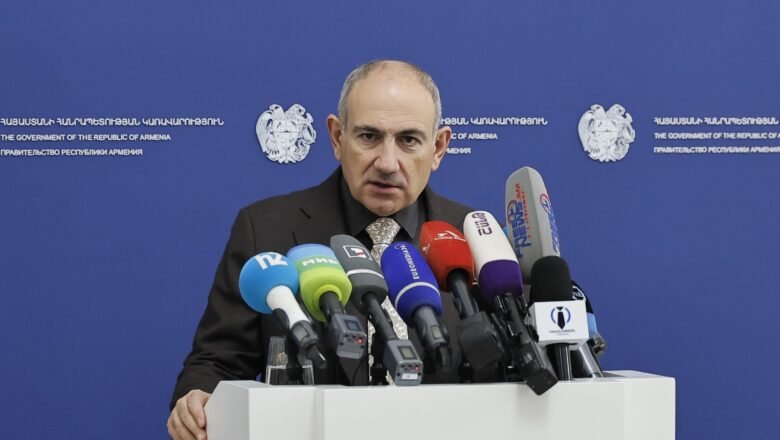
Armenia’s Prime Minister Nikol Pashinyan explained at a briefing on 19 November why the Ministry of Finance draft on turnover tax and micro-business includes restrictions. He said the aim is to stop big business laundering money through fictitious expenses with small firms and to make sure state support reaches genuine micro-businesses.
What the Prime Minister was asked
A journalist recalled that in spring the Prime Minister had promised to double the micro-business threshold and keep the turnover tax threshold at 115 million drams. The draft formally does this, but business is worried: companies working with turnover tax payers will not be able to deduct those expenses from profit tax, and it will pay them to look for other counterparties. The journalist asked whether it would be more honest to say openly that the state wants to abandon the special regimes.
Who counts as a micro-business
According to the Prime Minister, a micro-business is one whose annual turnover was up to 24 million drams and will now be up to 50 million drams (about $138.5 thousand). The state considers it small, vulnerable and in need of support.
Three missing receipts mean five years without special regimes
Nikol Pashinyan said the state does not accept that someone with a turnover of 100 million drams fails to issue cash register receipts: it is through receipts that the State Revenue Committee sees real annual turnover. So the threshold is being raised, but if a failure to issue a cash register receipt is recorded three times in a year, the payer loses the right to both turnover tax and the micro-business regime for five years.
According to the Prime Minister, fines do not work: people say “fine me as much as you like”, so a five-year ban is needed.
Why expense deductions are being restricted
“In Armenia there is a mechanism whereby large companies launder the money of their big enterprises through turnover tax payers or micro-businesses they themselves set up, booking expenses through fictitious transactions,” Nikol Pashinyan said. The restriction on deducting expenses targets this and aims to shrink the shadow economy.
The Prime Minister said the state supports those who are objectively small with “greenhouse conditions”, but does not accept being “taken for a fool”. He acknowledged that conditions are being created under which those whose turnover is objectively above the turnover tax or micro-business thresholds will not be entitled to work under these regimes.
Targeted support
According to the Prime Minister, once micro-business is defined by objective criteria, support will become targeted. At present, support of 1–2 billion drams intended for roughly 10 genuine recipients can end up spread across 70, of whom 60 should not receive it, which makes the policy ineffective.
Who needs this and what it means
In the government’s logic, the winners are genuine micro-businesses, whose threshold is doubling, and the budget, which should collect taxes hidden behind fictitious expenses. The losers are those who use small firms to reduce profit tax and those who stay in a special regime without issuing cash register receipts. However, the restriction on deducting expenses applies to all transactions, including those with honest small suppliers. In effect, the Prime Minister’s answer means the special regimes remain, but only for businesses that are objectively small.
What to do
- Turnover tax payers and micro-businesses should always issue cash register receipts: three violations in a year mean losing the special regime for five years.
- Profit tax payers should review contracts with contractors on turnover tax before 1 January 2027, as expenses on their services and works will no longer be deductible.
- Turnover tax payers should likewise assess the services and works they buy from micro-businesses.
- When closing a business and restarting the same activity at the same address, take the related-party criteria into account.
- The draft (No. 10825) is still posted on e-draft.am, where proposals can be submitted.
Background
Businessdaily.am reported on 2 November on the Ministry of Finance draft. From 1 January 2027 the micro-business threshold for companies and individual entrepreneurs will rise from 24 million to 50 million drams, while for individuals without entrepreneur status it stays at 24 million drams. For certain Tax Code violations, turnover tax and micro-business status are barred for the year of the violation and the following four years; only violations recorded after the law takes effect count. A closed business and one continuing the same activity at the same address can be deemed related and also lose the special regimes. The government’s 2026–2031 programme provides for at least doubling the threshold and for access to the regime depending on tax compliance.
Editor’s comment
The Prime Minister set out the draft’s logic clearly: the restrictions target abuse of the special regimes, not the regimes themselves. But the concern raised by the journalist remains open: the ban on deducting expenses does not distinguish fictitious transactions from real ones, so honest small suppliers may lose large clients. The outcome will depend on how well the State Revenue Committee can uncover specific schemes without penalising the whole segment.