
Pashinyan’s December: G20 in Miami and three trips to Russia; an EU–EAEU referendum will happen, only the timing is open
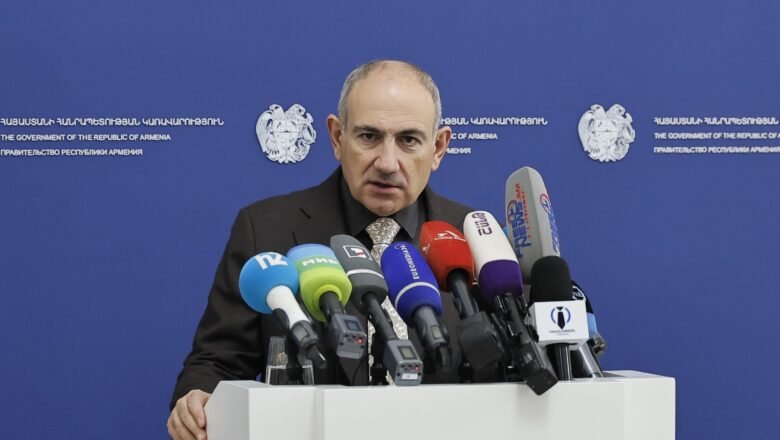
Armenia’s Prime Minister Nikol Pashinyan will attend the G20 summit in Miami in December and travel to Russia three times, including for two meetings of EAEU bodies. At a briefing on 19 November he also said a referendum on choosing between the EU and the EAEU will take place: the question is its timing and whether the substance behind it has matured enough.
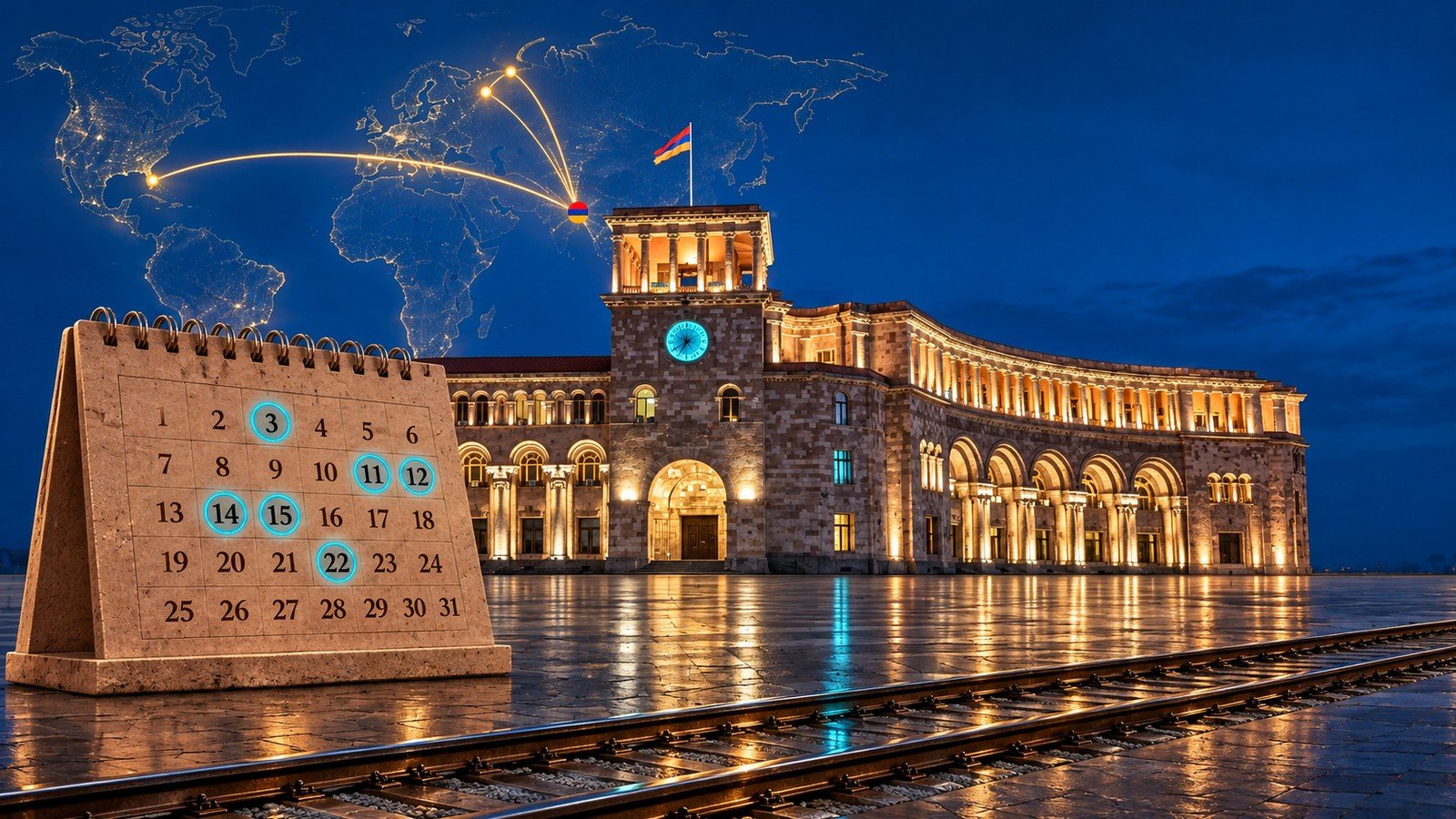
The Prime Minister’s December schedule
- 3 December — a working visit to Moscow and a meeting with the President of Russia. Both Pashinyan and the Russian President spoke of the preliminary agreement after their meeting in Bishkek; the aim is to discuss current issues.
- 11–12 December — a long-planned meeting of the Eurasian Intergovernmental Council in the prime ministers’ format.
- 14–15 December — the G20 summit in Miami.
- Late December — the annual meeting of EAEU and CIS leaders in St Petersburg. Speaking in Dublin on 14 November, Pashinyan gave the date of that visit as 22 December.
G20: “a great honour”
According to Pashinyan, Armenia has been invited to the G20 summit in Miami on 14–15 December. “It is a great honour to receive such an invitation,” the Prime Minister said, confirming he will definitely attend. Other countries have also been invited, including Azerbaijan and Kazakhstan, while Russia is a G20 member. The remaining details of the participation are under working discussion.
Three trips to Russia are no sign of trouble
A journalist asked whether the frequency of the visits was linked to problems in Armenian-Russian relations. Pashinyan replied that all three had been announced in advance: the Moscow meeting was agreed in Bishkek, the prime ministers’ meeting was planned long ago, and the EAEU and CIS leaders meet in St Petersburg every year.
EU or EAEU: a referendum will happen, the question is when
The Prime Minister said the choice between the EU and the EAEU has become a live issue as a result of domestic processes in Armenia, and Russia does not play the primary role here. “We also recognise that such a question will arise and that there will be a need for such a referendum, and we have not hidden this,” Pashinyan said. The question, he added, is the timing of the referendum and whether the substance linked to it has matured enough.
Railway: Russian Railways or other investors
Asked whether the concession of Armenia’s railway would be discussed with the Russian President, Pashinyan said he assumes it will. A working group has been set up with Russian Railways (RZD), and there is one question: whether RZD is ready to invest on the scale needed to make Armenia’s railway competitive. If it is, that is good; if not, Armenia will find other investors.
2026–2031 programme: visa-free travel with the EU in 2029, and Turkey
On the same day the government approved its programme of measures for 2026–2031. Prime Minister Nikol Pashinyan named visa liberalisation with the EU in 2029 as the goal. Over time that deadline seems increasingly realistic to him, especially in the context of political relations with the EU. Biometric passports, border management reform and digitalisation are important for it.
Armenia’s Foreign Minister Ararat Mirzoyan said the programme includes full normalisation of relations with Turkey and the opening of the borders, as well as deeper relations with the EU with a membership perspective, taking into account the law adopted by parliament last year.
What it means for trade
December is becoming a key month for Armenia’s EAEU membership. Both Eurasian meetings take place against the backdrop of a report by Belarus, Kazakhstan, Kyrgyzstan and Russia on the consequences of suspending the application of the EAEU Treaty to Armenia. The report was prepared for the December meeting of the Supreme Eurasian Economic Council.
Russia remains Armenia’s largest trading partner, although the EU’s share is growing fast. Businessdaily.am reported January–September 2026 figures: trade with EAEU countries totalled $4.30 billion (28.8% of all trade, down 17.4% year on year), with Russia $4.02 billion (26.8%, down 19.4%) and with the EU $2.68 billion (17.9%, up 49.1%).
Who should care and what to do
- Exporters to EAEU markets should follow the outcomes of the 11–12 December and late-December meetings, which will show whether current access to the union’s market is preserved, and assess alternative markets and EU product requirements in advance.
- EU-oriented companies should factor in the government’s goal of visa liberalisation with the EU in 2029 and deeper relations with a membership perspective.
- Logistics and transport companies should follow the railway concession talks: the competitiveness of rail freight depends on RZD investment or the arrival of other investors.
- Businesses linked to Turkey: normalisation of relations and the opening of the borders are now part of the government’s 2026–2031 programme.
Background
On 5 November businessdaily.am wrote that Pashinyan and Mirzoyan named 2027 or 2028 as the likely time for an EU membership application. The Prime Minister said then that Armenia is not going to leave the EAEU but is preparing an alternative so that the people can choose, and that there is currently no subject for a referendum. The government disagrees with a large part of the four countries’ report and will raise its objections through working channels.
Businessdaily.am analysed the report separately. By its estimates, a suspension could cut Armenia’s GDP by 15.6%, raise the gas price from $177.5 to $300 per 1,000 cubic metres and reduce exports to the EAEU by 65.8%.
On 19 November businessdaily.am covered the 2026–2031 programme of measures: 733 measures across six areas, average economic growth of 6% a year and 125,000 new jobs.

Editor’s comment
The emphasis has shifted in two weeks: on 5 November the Prime Minister said there was no subject for a referendum yet, and on 19 November that a referendum will happen and only the timing is open. December will show how EAEU partners take this: the report on suspending the treaty reaches the leaders’ table in the very days Pashinyan will be in St Petersburg. The G20 invitation signals a different level of external contacts for Yerevan, but for exporters the specifics of the December meetings matter more: access to the union’s market, gas and the railway. On the concession, the stance is pragmatic: Yerevan is turning the conversation into one about investment and keeping a fallback option.