
Armenia ready to build an oil refinery running on Iranian oil if it carries no sanctions risk
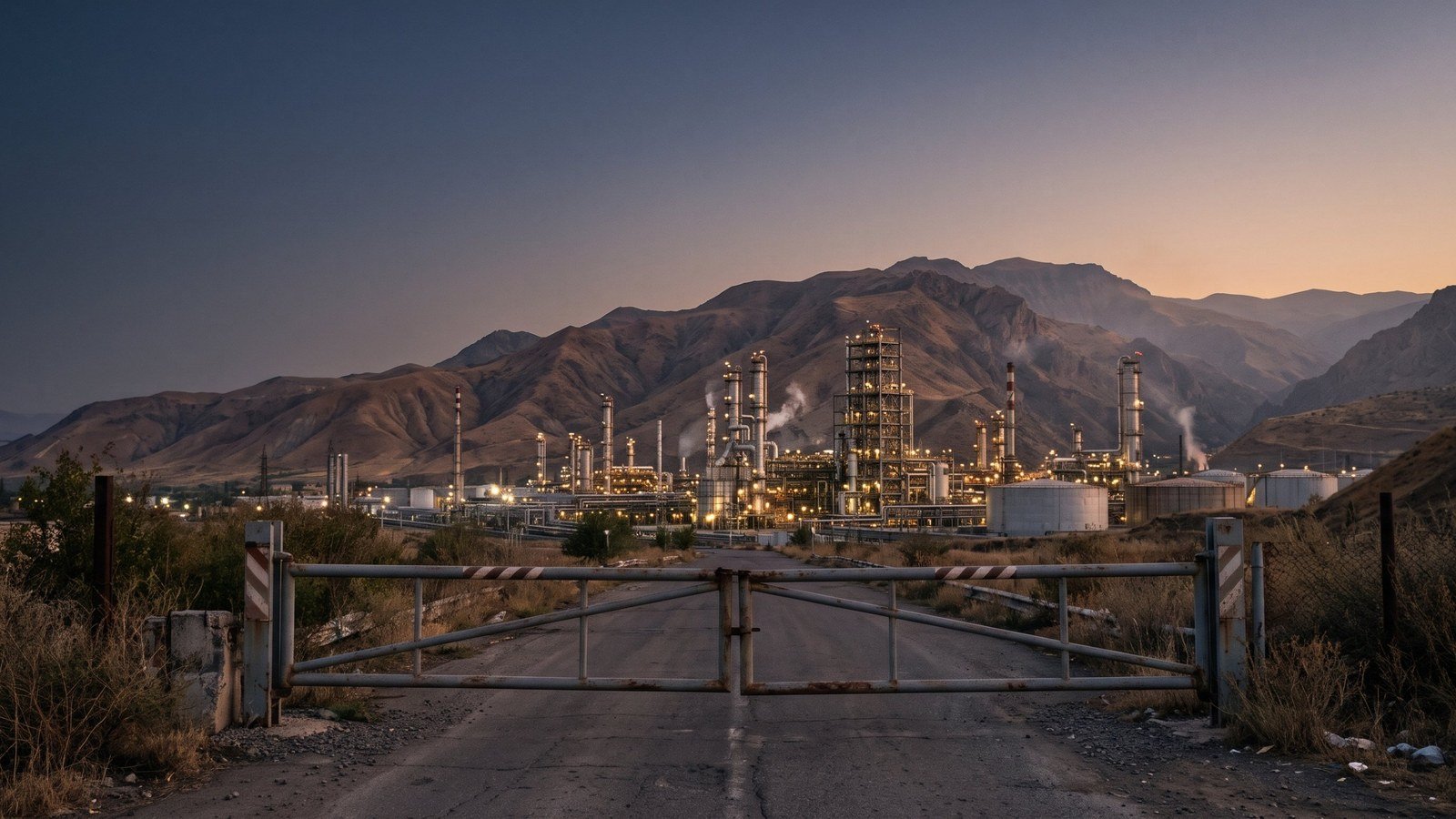
Armenia is ready to build an oil refinery running on Iranian oil, provided the project creates no sanctions threat. There is an understanding with Iran, and the issue is now being discussed with the United States and the European Union, Prime Minister Nikol Pashinyan said at a briefing after the government session on 19 November. In 2023–2024 Armenia was refused the refinery technology precisely because of sanctions.
What the prime minister said
A journalist asked what the programme was: Minister of Territorial Administration and Infrastructure Davit Khudatyan had returned from Iran, and the Iranian press was reporting that Armenia was considering building an oil refinery.
“We will implement this programme with great pleasure if there is no sanctions threat,” Pashinyan replied. He said the government was now examining and discussing whether there was a sanctions problem.
Why Armenia was refused the technology
- Armenia does not have oil refining technology; it has to be acquired elsewhere.
- The discussions are not new: in 2023 and 2024 Armenia approached suppliers wanting to buy a refinery — the technology and a production line.
- Asked why, Armenia said it wanted its own oil refinery. Asked where the oil would come from, it said the Islamic Republic of Iran.
- The answer was: we cannot sell, because the manufacturers of these lines, the technology or the plant would then fall under sanctions.
Who is being consulted now
There is an understanding with Iran. Armenia now has to discuss with the United States and the European Union whether they see a way to do this without a sanctions problem. “If they say yes, we will implement this programme with great pleasure,” the prime minister said.
The Iran border is at capacity
At the government session the same day, Chairman of the State Revenue Committee Eduard Hakobyan said the Agarak checkpoint on the border with Iran is working at its limit, at about 270 units a day.
- A new checkpoint with three times the capacity is being built with European funds by an Iranian company.
- Armenia and Iran have signed an agreement on mutual recognition of authorised economic operators, with a pilot due next year.
- According to Pashinyan, a second bridge is planned on the border with Iran.
Who needs it
- The fuel market: domestic refining would reduce dependence on imports of finished petroleum products.
- Iran: a new outlet for crude oil in a neighbouring country.
What it means
The project is still at the stage of a political decision: no site, capacity, investor or timeline has been named. The key question is no longer Iran but the position of Washington and Brussels: without it, technology suppliers will not sign, as happened in 2023–2024.
Editor’s comment
For fuel market and logistics players, the outcome of the consultations with the US and the EU will be decisive; until then, factoring a domestic refinery into plans is premature. Hauliers working with Iran would do better to plan around the nearer changes: the authorised economic operator pilot next year and the launch of the new checkpoint.