Sevan National Park’s ten-year plan: beach rents to track tourist appeal, economic zone to shrink
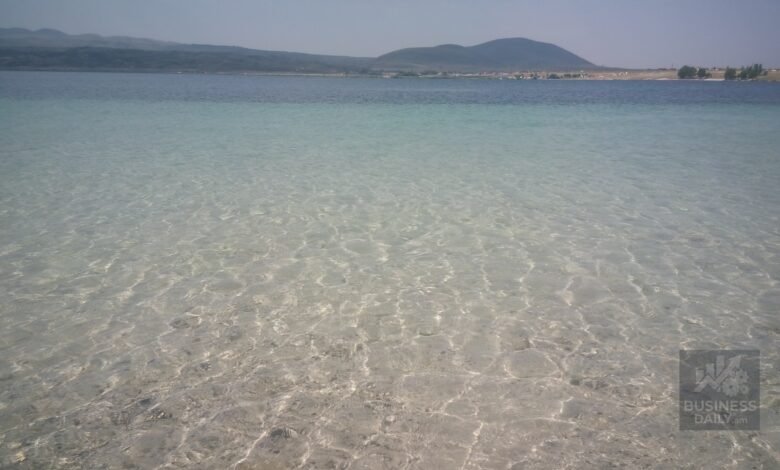
The Ministry of Environment has opened for consultation the package of the draft development plan for Sevan National Park for 2026–2036. The draft changes how beaches are leased, provides for a reduction of the economic zone and introduces a payment scheme for ecosystem services.
The plan is approved by order of the Minister of Environment. Sevan National Park was established in 1978 and covers 152.2 thousand hectares, of which 127.8 thousand is water surface and 24.4 thousand land. The territory spans the Sevan, Gavar, Martuni, Vardenis and Chambarak communities of Gegharkunik province.
Beach rents to follow tourist appeal
In the fourth quarter of 2027, the shoreline is to be zoned and a scale of rental payments set according to the degree of tourist appeal. The scale is to be approved in a document issued by the Sevan National Park organisation and the governor of Gegharkunik.
Over the same period, the mechanisms for managing beaches and transferring them for operation are to be improved. The draft plan states that improving lease agreements is aimed at collecting Sevan National Park’s receipts.
The new rental scheme will be based on territorial zoning, which according to the plan “will make it possible to identify the most valuable sites and accordingly secure the generation of more income”.
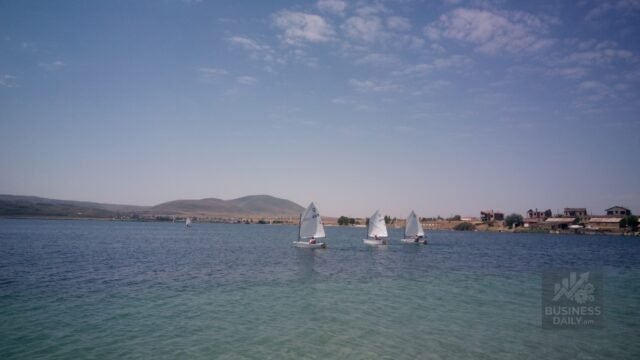
The economic zone will shrink, but not immediately
Zoning is planned in two stages. In the first, the reserve zone expands over a limited area; in the second it expands substantially at the expense of the economic zone. Second-stage changes are to begin in the fifth year of the plan’s operation.
For existing tenants the document sets out an important qualification: where land plots in the planned reserve and sanctuary zones have already been granted under lease, the change of zone applies only after the lease agreement expires.
The expansion of the zones is justified by the 30×30 initiative of the Kunming-Montreal Global Biodiversity Framework under the UN Convention on Biological Diversity.
Public-private partnership: five directions
The plan lists five possible areas for public-private partnership: management of shoreline areas and tourism infrastructure, management of pastures and land, management of aquaculture and fisheries, organisation of tourism systems, and development of nursery farming.
Partners are to be engaged through direct communication: discussions, site visits and study of factual data.
Four financial targets to 2036
The revenues of the Sevan National Park organisation are to increase by at least 10 percent against the current level, within the actual growth rates of 2018–2022. The share of receipts generated by the organisation itself in the income structure is to rise by 10 percent.
Also envisaged are at least two joint programmes with an international donor organisation and the introduction of an ecosystem services payment scheme with three business entities.
New sources of income
The largest amount, 12,000 thousand drams or 12 million drams, is to be invested in developing advertising infrastructure: billboards are to be installed on stretches belonging to Sevan National Park along the Yerevan–Tbilisi highway. The deadline is the third quarter of 2027. According to the table heading, amounts are given in thousand Armenian drams, in the column for the source of financing and the amount required for 2026.
In the second quarter of 2030, a site adapted for recreational fishing is to be created on Lake Sevan, with payment by the hour and by the weight of fish caught. The aim is to eliminate poaching through dedicated oversight.
In the first quarter of 2028, a national park conservation fund is to be established. In shoreline restaurants and catering outlets, the sum allocated to the fund will appear as a separate line on the bill.
Source: financial and marketing programme of the draft development plan for Sevan National Park, 2026–2036. Amounts in thousand Armenian drams, from the column “source of financing and amount required for 2026”. “Within budget” means the measure is provided for within the organisation’s annual budgets, with no separate amount specified.
Priority ecosystem services
Residents and businesses of the province identified 13 ecosystem services, namely: supply of fish and crayfish, water quality and quantity, recreation and tourism, bird nesting and animal habitats, food and feed production, electricity and energy, and forest and berries.
The economic backdrop
Gegharkunik is Armenia’s largest province by area: 18 percent of the country’s territory, 5,351.32 square kilometres, with around 213,200 residents. Some 40 thousand farm households operate in the province, with agricultural cooperatives in 42 settlements.
Average monthly income per capita is 40,927 drams, of which wage labour accounts for 15,341 drams or 37.4 percent, state benefits and pensions for 8,687 drams or 21.2 percent, and income from the sale of agricultural produce and livestock for 5,941 drams or 14.5 percent.