
Armenian Wine Week asks Armenians worldwide to buy 2 bottles of wine and gift one to a non-Armenian
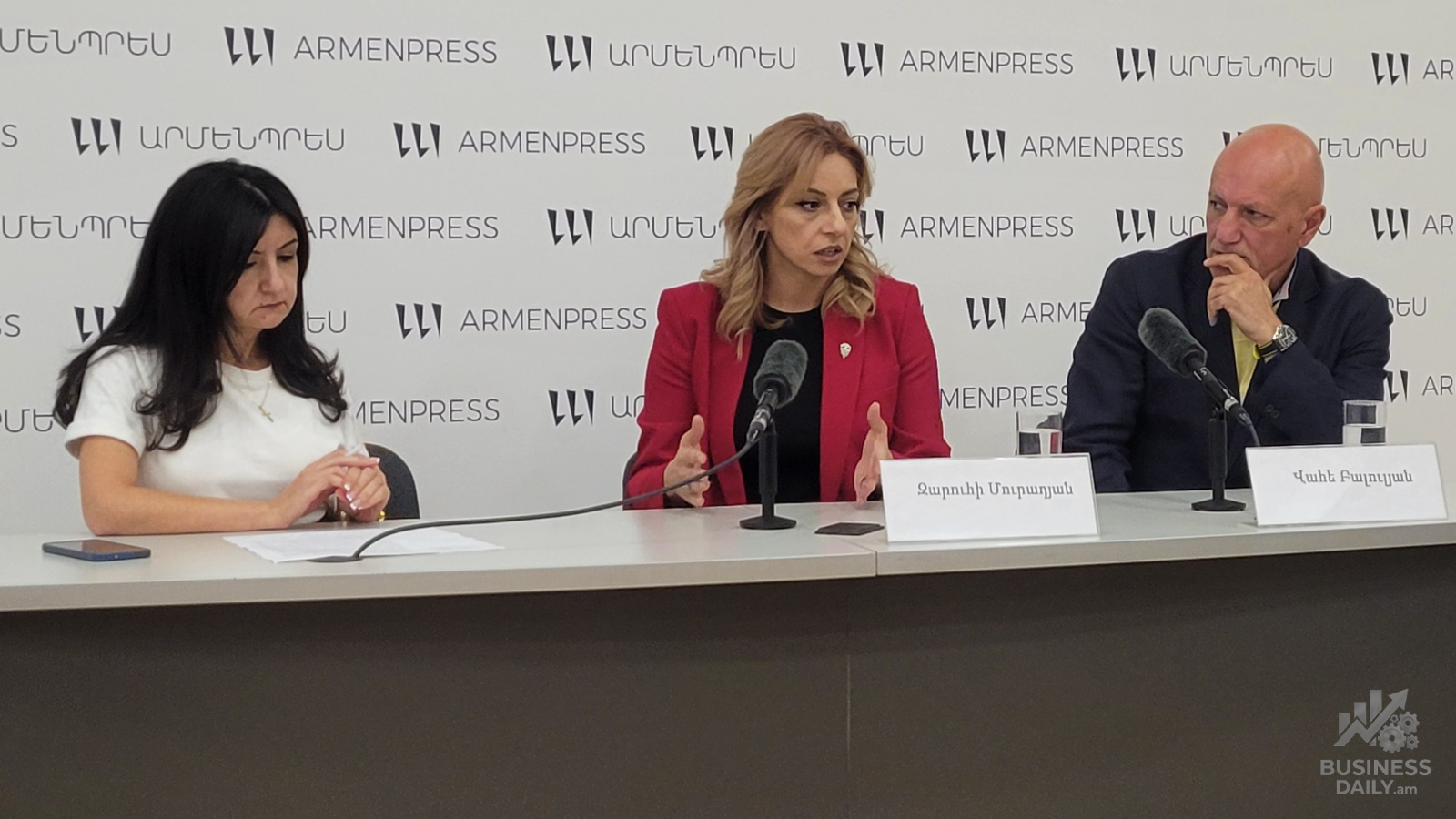
The Armenian Wine Week initiative is calling on Armenians around the world to buy at least two bottles of Armenian wine on November 8–14, give one to a non-Armenian and challenge three other Armenians to do the same.
Initiative founder Vahe Baloulian announced this at a press conference at the Armenpress news agency. Zaruhi Muradyan, Executive Director of the Vine and Wine Foundation of Armenia, also took part.
Armenian Wine Week is held every year in the second week of November, and from this year the second Saturday of November is also marked as International Areni Day, after Armenia’s best-known indigenous grape. The challenge is called “Uncork Armenia” and spreads through social media. Baloulian stressed that the initiative has no organising committee: “No money is collected from anyone, there is no leadership, there is only an initiative.”
The Armenian General Benevolent Union and the Armenian Assembly of America have joined the initiative, and the armenianwineweek.com website lists online sellers, shops, restaurants and importers. “It is only about spending at least 25 to 30 dollars, half of which stays in your home, and the other half you give to your friend,” Baloulian noted.
According to Baloulian, every bottle sold helps grape-growing families in Armenia’s border villages stay in their villages. “If we don’t buy wine, it means the grapes are not sold, it means that villager has nothing to do there, and he is forced to either sell or leave that village,” he added.
Per capita wine consumption in Armenia has risen from about 1 liter in 2016 to around 5 liters. Muradyan told BusinessDaily this at the press conference. She attributed the growth to tourists and to locals who increasingly choose wine. “Now probably all of us will notice that if earlier vodka, cognac and various strong alcoholic drinks were placed on tables, today more priority is given to wine,” Muradyan explained. At the same time, vodka consumption has not fallen much, and most of the vodka consumed is imported, she noted.
According to Muradyan, global wine consumption is falling mainly in the cheap segment, while demand for mid-range and premium wines has remained stable and even grown. Armenia is focusing on premium wines: “We cannot compete with the countries that today supply large volumes of wine to the whole world,” she stressed, referring to bulk wine sold for less than $1 a bottle.
Grapes are the basis of quality wine, and here, the head of the foundation said, there are serious problems. Armenia has no research centres studying the potential of its grape varieties, and single-variety vineyards are scarce, so wineries plant their own vineyards and work with geneticists.
According to the Statistical Committee of Armenia, Armenia produced 4.89 million liters of grape wine in January–August 2026, up 23.4% year on year. The growth follows two years of decline: from 14.12 million liters in 2023, output fell 29% in 2024 and a further 23.3% in 2025, to 7.69 million liters. Production of vodka, liqueurs and other spirits dropped 25.1% in January–August 2026.
Muradyan urged people to join the campaign: “It seems like a very simple thing, but the impact can truly be very big.”


